Translate

Sunday, August 27, 2023

Deliverance


And the Lord will deliver me from every evil work and preserve me for His heavenly kingdom.  To Him be glory forever and ever.  Amen!  2 Timothy 4:18 (NKJV)

When we recite the Lord's Prayer, we come upon this phrase:  "deliver us from evil."  It can mean deliver us from sin, as we all fall into temptation daily.  It can also mean deliver us from the evil one, meaning the devil or from men who are opposed to God. 

When we read Psalm 54, the preamble tells us the specific event in which David prayed for deliverance from men who were focused on his destruction.  We read about this event in 1 Samuel 23, beginning in verse 15:

David saw that Saul had come out to seek his life.  David was in the wilderness of Ziph at Horesh.  And Jonathan, Saul's son, rose and went to David at Horesh, and strengthened his hand in God.  And he said to him, "Do not fear, for the hand of Saul my father shall not find you.  You shall be king over Israel, and I shall be next to you.  Saul my father also knows this."  And the two of them made a covenant before the Lord.  David remained at Horesh, and Jonathan went home.  Then the Ziphites went up to Saul at Gibeah, saying, "Is not David hiding among us in the strongholds at Horesh, on the hill of Hachilah, which is south of Jeshimon?  Now come down, O king, according to all your heart's desire to come down, and our part shall be to surrender him into the king's hand." 

We see that the residents of Ziph were willing to give up David to Saul so that he could be killed.  It is interesting to note that the Ziphites were Israelites.  They were not foreigners like the Philistines or Edomites.  In fact they belonged to the very tribe that David belonged to, the tribe of Judah.  He was one of them, yet they were willing to betray him into Saul's hand.  This was a foreshadowing of Judas, the disciple who betrayed Jesus into the hands of the Pharisees.

Knowing this, David prayed this prayer in Psalm 54

O God, save me by Your Name, and vindicate me by your might.  O God, hear my prayer; give ear to the words of my mouth.  For strangers have risen against me; ruthless men seek my life; they do not set God before themselves.  Behold, God is my helper; the Lord is the upholder of my life.  He will return the evil to my enemies; in Your faithfulness put an end to them.  With a freewill offering I will sacrifice to You; I will give thanks to Your Name, O Lord, for it is good.  For He has delivered me from every trouble, and my eye has looked in triumph on my enemies.

I. DAVID'S COMPLAINT

A.   My Enemies Are Malicious

After calling on God to hear him, David calls these men "strangers" and "ruthless men".  The Hebrew word "stranger" here can mean "estranged" or "strange men," even "the insolent."  Technically, they were David's kinsmen, as they were all from the tribe of Judah.  Yet to David they showed a rude and arrogant lack of respect.  They called for David's life to gain favor with the king.  They were looking out for themselves at David's expense.

David also calls them ruthless.  This same Hebrew word is also translated terrible, oppressor, mighty, strong, and violent.  It can mean awe-inspiring or terrifying.  This was no small thing.  David feared for his life.

At times, we also may be fearful.  We may be in physical danger like David was, or we may fear for our family, our friends, or our finances.  1 Peter 5:8-10 says, "Your adversary the devil prowls around like a roaring lion, seeking someone to devour.  Resist him, firm in your faith, knowing that the same kinds of suffering are being experienced by your brotherhood throughout the world.  And after you have suffered a little while, the God of all grace, who has called you to His eternal glory in Christ, will Himself restore, confirm, strengthen and establish you."  In times of distress, may we call out to God like David did.

B.  My God Is Mighty To Save

On whom does David call?  He calls out for salvation and for vindication, not from the soldiers who were in his ranks, but from God.  David specifically calls on the name of the Lord--not that he called God by name, but he invokes the reputation, fame, and glory that His name implies.  Romans 10:13-14 says, "Everyone who calls on the name of the Lord will be saved.  How then will they call on Him in whom they have not believed? And how are they to believe in Him of whom they have never heard?"  God's reputation precedes Him.

Matthew Henry wrote in his commentary, "He appeals to God's strength, by which He was able to help him, and to His name, by which he was engaged to help him, and begs He would save him from his enemies and judge him, that is, plead his cause and judge for him. David has no other plea to depend upon than God's name, no other power to depend upon than God's strength, and those he makes his refuge and confidence. This would be the effectual answer of his prayers (v. 2), which even in his flight, when he had not opportunity for solemn address to God, he was ever and anon lifting up to heaven: Hear my prayer, which comes from my heart, and give ear to the words of my mouth.

Proverbs 18:10 says, "The name of the Lord is a strong tower; the righteous man runs into it and is safe."  Jeremiah 15:21 says, "And I will deliver you out of the hand of the wicked, and redeem you from the grasp of the ruthless."  Isaiah 49:25 says, "Thus says the Lord: even the captives of the mighty shall be taken, and the prey of the tyrant shall be rescued, for I will contend with those who contend with you, and I will save your children."

II. DAVID'S COMFORT

A.  The Proclamation

"Behold, God is my helper," David says in verse 4.  He goes on: "The Lord is the upholder of my life.  He will return the evil to my enemies."  Then in verse 7, is this confident conclusion.  "For He has delivered me from every trouble, and my eye has looked in triumph on my enemies."  There are three separate statements of faith.

1.  God is my helper; the Lord is the upholder of my life.  Someone asked Fred Rogers about his response to a particular tragedy.  "When I was a boy," he said, "and I would see scary things in the news, my mother would say to me, 'Look for the helpers.'  You will always find people who are helping."  While it is always good to see people helping other people after a tragedy, David was not calling on other people.  His help was in God and God alone.

Unbelievers often accuse Christians of using God as a crutch.  I don't think this is what David meant by helper.  God is not there to assist me to do something I could do when I was younger, or that I could do on my own if only I had more strength.  No, God's ability is not limited like that.  The term "upholder of my life" is not a crutch; it's not even a stretcher, although that is more in line with the original meaning--one on whom I can lean, can find rest, can lie down on while He carries me.  This is why God could say in Exodus 14:14, "The Lord will fight for you; you only need to be still." God is sovereign; He will work out His will and His way, and deliver us in the process.

Now God may use people to work out His will and His way.  In our reference passage in 1 Samuel 23, we see that when Saul did pursue David, he was very close to finding him and bringing him to trial.  Verse 26 says, "Saul went on one side of the mountain, and David and his men to the other side of the mountain."  Suddenly, in verse 27 a messenger came to Saul, and said, "Hurry and come, for the Philistines have made a raid against the land."  Saul had to call off his search for David because it was more important to fend off a foreign attack from the Philistines.  Coincidence?  I don't think so.

2.   He will return the evil to my enemies.  God is able to turn the tables, to bring the same measure of trouble to evil men that they themselves were trying to bring to the godly.  Matthew 7:1-2 says, "Judge not, that you be not judged.  For with the judgment you pronounce you will be judged, and with the measure you use it will be measured to you."

In the book of Esther, the evil Haman built a gallows on which to hang Esther's uncle Mordecai; in the end, it was Haman himself who was executed on that same structure, while Mordecai lived. In Judges 11, Jephthah was looked down upon by his half-brothers because he was the son of a prostitute.  They all rose to positions of power in the army, but looked down on Jephthah because of his lineage.  In the end, however, when the people were in dire straits, they came to Jephthah and asked him to lead them against their enemies.

And this brings us to our third point.

3.  He has delivered me from every trouble, and my eye has looked in triumph on my enemies.  God is faithful.  He is unchanging.  David knew from experience what God could do.  Why would he doubt God now?  Psalm 37:25 says, "I have been young, and now am old, yet I have not seen the righteous forsaken or His children begging for bread."

Our own experience can testify to the goodness of God.  We have seen His mighty works, not only in scripture, but in our own life experiences.  Does that mean He will always keep us from danger? No, but it does mean He will deliver us, just as He has done so many times before.

B.  The Prayer

"In Your faithfulness," David prays, "put an end to them.  With a freewill offering I will sacrifice to You; I will give thanks to Your Name, O Lord, for it is good."  Because of God's nature, David can rest assured that He will work all things out for His glory.  If we remain faithful to Him, then it may also work out for our good.  Romans 8:28 says, "And we know that for those who love God all things work together for good, for those who are called according to His purpose."  If we are called according to His purpose, then when God works His purpose in us we will be better off.  We may not be where we wanted to be, especially if our desire was to benefit ourselves.  God may not have purposed us to be wealthy or famous, or to have anything resembling success in the eyes of the world; but if He works out His purpose in us and we are called to that very purpose, then we are to be envied.

Lamentations 3:22-23 says, "The steadfast love of the Lord never ceases; His mercies never come to an end; they are new every morning; great is Your faithfulness."  This is the reason that David could bring a freewill offering, a sacrifice that was not required to fulfill a vow, or to pay for a sin that had been committed.  In the book of Exodus, when God commanded Moses to build a tabernacle, the people brought freewill offerings.  That is, God did not command for them to give anything toward the building of the Tabernacle.  There was not some giant building fund or giving campaign like you see in so many churches.  As God moved in their hearts, so they gave, and the result was a mobile Temple that was more ornate and beautiful than any of the tents in which they dwelt.

Notice the verb tense in the promise that David makes.  I will give You praise.  He knew that whatever the outcome, he would end up praising God, both in this life and the next.  Like Job, he knew that God's name would be praised whether he lived or died; but somehow I think this was a statement of faith.  When God delivered Him from the hands of his enemies, David would give God praise, no matter how long it took.

When I was growing up in a Baptist church, we would sing this hymn by W. A. Ogden

1 ’TIS the grandest theme through the ages rung;
’Tis the grandest theme for a mortal tongue,
’Tis the grandest theme that the world e’er sung,
“Our God is able to deliver thee.”

-refrain-  He is able to deliver thee,
He is able to deliver thee:
Though by sin oppressed, go to Him for rest;
Our God is able to deliver thee.

2 ’Tis the grandest theme in the earth or main!
’Tis the grandest theme for a mortal strain,
’Tis the grandest theme, tell the world again,
“Our God is able to deliver thee.”

3 ’Tis the grandest theme, let the tidings roll
To the guilty heart, to the sinful soul,
Look to God in faith, He will make thee whole,
“Our God is able to deliver thee.”


Saturday, August 12, 2023

How to avoid scorn and derision from the Righteous One


He who sits in the heavens laughs; the Lord holds them in derision.  --Psalm 2:4

One of my all-time favorite movies is The Princess Bride.  Although it is not a religious film in any way, shape, or form, there is divine imagery throughout.  Westley, the hero, is pure of heart, with an undying love for Buttercup.  His love is sacrificial, and he veritably comes back from death's door to rescue her and save her from a fate worse than death.

I hope you won't think less of me when I tell you that one of the many reasons I love this film is its use of insults.  When Buttercup is announced as the bride-to-be of Prince Humperdinck, all the people bow down except one wretched woman who dares to speak the truth.  "Boo!  Boo!!" she hisses.  "Bow to the queen of slime, the queen of filth, the queen of putrescence!  That's what she is.  The queen of refuse."  The point is well taken, for to have been taken in by this sham marriage would not only have meant that Buttercup had turned her back on True Love, but as we find out later in the film, would have led to her demise in a political plot thought up by Humperdinck to have her killed and then to use her death to foment a war against their enemies.

When Humperdinck does confront the (mostly) resurrected Westley, he accuses the farm boy of being too weak to fight.  Westley counters, "It's possible, pig.  It's conceivable, you miserable vomitous mass."  He goes on to explain what would happen to Humperdinck if he did not surrender. "I'll explain," he says," and I'll use small words so that you'll be sure to understand, you warthog-faced buffoon."  You remember the scene.  Westley does not want to fight to the death, but rather what he calls "to the pain."  He promises to defeat Humperdinck, then cut off his feet below the ankles, then his hands below the wrists, followed by his nose.  Then he promises to gouge out his eyes one by one.  Humperdinck interjects, as if to show he has no fear, "And then my ears.  I understand, let's get on with it."  Westley retorts, "Wrong! Your ears you keep and I’ll tell you why. So that every shriek of every child at seeing your hideousness will be yours to cherish. Every babe that weeps at your approach, every woman who cries out, “Dear God! What is that thing,” will echo in your perfect ears. That is what ‘to the pain’ means. It means I leave you in anguish, wallowing in freakish misery forever."

I could not help but recall this scene when I read Psalm 52.  Read it with me now.
Why do you boast of evil, O mighty man? The steadfast love of God endures all the day.  Your tongue plots destruction, like a sharp razor, you worker of deceit. You love evil more than good, and lying more than speaking what is right.  You love all words that devour, O deceitful tongue.  But God will break you down forever; He will snatch you and tear you from your tent; He will uproot you from the land of the living.  The righteous shall see and fear, and shall laugh at him, saying, "See the man who would not make God his refuge, but trusted in the abundance of his riches and sought refuge in his own destruction!"  But I am like a green olive tree in the house of God.  I trust in the steadfast love of God forever and ever.  I will thank You forever, because You have done it.  I will wait for Your Name, for it is good, in the presence of the godly.

We have been studying those particular Psalms with a back-story, ones that point to a particular time in the life of David that he wanted memorialized in song.  The superscription to this Psalm says "To the choirmaster.  A Maskil of David, when Doeg the Edomite came and told Saul, 'David has come to the house of Abimilech'."  If you have been following my blog recently, you will recall this reference, for it is from 1 Samuel 22.  Psalm 34 makes reference to it, but here in Psalm 52 it serves as a direct indictment of a man named Doeg, who was aligned with Saul.

David had been fleeing from Saul, and Saul was always one step behind.  In frustration, Saul whines that everyone in his royal court is in on the conspiracy.  "No one discloses to me when my son makes a covenant with the son of Jesse.  None of you is sorry for me or discloses to me that my son has stirred up my servant against me, to lie in wait, as at this day." (1 Samuel 22:8).  There was a man in Saul's court named Doeg. We have seen in 1 Samuel 21:7 that he had witnessed David at the house of Abimilech the priest in the city of Nod.  It is not clear how much time had elapsed between chapters 21 and 22; it could be that Doeg held onto this information until it would benefit him.  In other words, he may not have gone straight to the king and said, "I have seen David at this place."  Instead, he only divulged this information when it appeared that Saul may have been willing to pay for it.  At the very least this information would have gained Doeg a prominent place in Saul's court.

Unfortunately, this pledge of loyalty caused Doeg to commit even more egregious sins.  1 Samuel 22:11-17 says that Saul summoned Abimilech and demanded to know why he had committed treason, by giving aid and comfort to his enemy.  Abimilech the priest protested his innocence--why wouldn't he help David, who was the king's son-in-law?  How could he have known that Saul now counted David as his enemy?  Saul ordered his soldiers to kill not only Abimilech, but all of the priests.  When the soldiers refused to touch the men of God, Saul ordered Doeg to kill them all.  Doeg then killed 85 priests, along with their women and children. (1 Samuel 22:18-19.)

It was this tragedy that David wrote about in Psalm 52:1-4.

Why do you boast of evil, O mighty man?....Your tongue plots destruction, like a sharp razor, you worker of deceit.  You love evil more than good, and lying more than speaking what is right.  You love all words that devour, O deceitful tongue.

Matthew Poole wrote in his book A Commentary on the Holy Bible, vol 2 Ezra to Psalms (1968), “O mighty man! he speaks ironically. O valiant captain! O glorious action! to kill a few weak and unarmed persons in the king’s presence, and under the protection of his guards! Surely thy name will be famous to all ages for such heroical courage.”  The English translation probably masks the vile names that David was calling this coward Doeg the Edomite.

Before you recoil at calling people vile names, thinking that it is not very Christ-like, remember the words of Jesus Himself when He called out the Pharisees, calling them a "brood of vipers" (see Matthew 12:34 and 23:33).  These men were supposed to be keepers of the Temple, where the people went to meet God Himself, yet they had put up costly barriers for the people and then shared in the profits.  In the same way, Doeg provided military intelligence to Saul in his war against David, then took the priests captive and slew them as an act of war, in hopes of gaining wealth from Saul, the king.

David then pronounces judgment on Doeg.

But God will break you down forever; He will snatch and tear you from your tent; He will uproot you from the land of the living.  The righteous shall see and fear, and shall laugh at him, saying, "See the man who would not make God his refuge, but trusted in the abundance of his riches and sought refuge in his own destruction." --Psalm 52:5-6

Surely God would punish Doeg for his deeds.  And when his life had been required of him, the righteous would read of him and laugh at his legacy.  The Hebrew word for laugh used here means to laugh mockingly, to jeer and deride.  Here I think we can insert the insults from the movie: "See the pig, the miserable vomitous mass, the one who would not take refuge in the Almighty!  He trusts in his riches, this prince of putrid, this son of slime, the mercenary of muck!"

Doeg showed loyalty to Saul in a way that would make him famous, just not in the way that he had wanted.  He would forever be seen as one who strapped on a sword against those who strapped on the Ephod, killing innocent people for personal profit.  David points out that God would not allow it, but would break him down forever, tear him from his tent, and uproot him from the land of the living.  Moreover, when he stood before God in judgment, he would be cast into hell.

Finally David contrasts his own righteousness under the grace of God.

But I am like a green olive tree in the house of God.  I trust in the steadfast love of God forever and ever.  I will thank You forever, because You have done it.  I will wait for Your name, for it is good, in the presence of the godly.  --Psalm 52:8-9

David was not innocent in this scenario, and not without guilt.  First of all, he had lied to Abimilech the priest, hiding from him the fact that he was fleeing from Saul.  David make another admission of guilt in 1 Samuel 22:22, when one of the sons of Abimilech escaped and told David that Saul had killed the priests.  "David said to Abiathar (the son of Abimilech), 'I knew on that day, when Doeg the Edomite was there, that he would surely tell Saul.  I have occasioned the death of all the persons of your father's house'."

Yet David trusted in God, not gold, for his protection.  Twice in this Psalm he uses the Hebrew word hesed, once in verse 1 (the steadfast love of God) and again in verse 8.  This is one of my favorite words in the Bible, because it is so rich.  It can mean goodness, kindness, and faithfulness.  It can also mean a reproach, and shame.  To David the steadfast love of God meant mercy, forgiveness and favor.  To Doeg, the steadfast love of God meant reproach for a wicked thing. 

Circling back to Christ-likeness.  Many people take the verse out of context that says "Judge not, lest you be judged." (Matthew 7:1)  They forget the very next verse, which says, "For with the judgement you pronounce you will be judged, and with the measure you use it will be measured to you."  In context, this is a warning against hypocrisy.  Let's look at John 7:24, where Jesus said, "Do not judge by appearances, but judge with right judgment."  Further, in John 8:26, Jesus said to the Pharisees, "I have much to say about you and much to judge, but He who sent me is true, and I declare to the world what I have heard from Him."  If we are to truly be like Jesus, we will declare to the world what we have heard from Him, and judge people according to His righteousness.  But we must also bear in mind his grace and mercy, His hesed, so that by His grace we can draw others to Him.  For those who reject His message, Jesus gave a parable in Matthew 25 about separating the sheep and the goats.  His sheep, who had gone about on earth doing good and trusting God's faithfulness will be given a reward and will live with Him in heaven.  The goats, who had gone about on earth denying goodness and not trusting in God, will be separated from Him forever.  By their fruits we shall know them (Matthew 7:20).

Those trees that bear good fruit will be pruned so they can be more productive.  Those trees that do not bear good fruit are taken down and burned.  David likens himself to a green olive tree, vibrant and full of life, bearing good fruit for all to see.  Doeg was uprooted and was like a tree destined for the burn pile.

Saturday, July 8, 2023

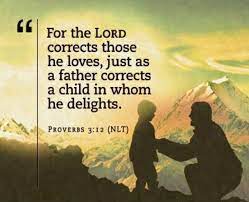
He disciplines those whom He loves


O Lord our God, You answered them; You were a forgiving God to them, but an avenger of their wrongdoings.  --Psalm 99:8

Have you ever had somebody love you so much that they would sincerely tell you if you were wrong?  Having our shortcomings pointed out is never pleasant.  Our pride might get bruised, our self esteem may be damaged, but if we are truly in the wrong, wouldn't we want somebody to let us know?

2 Samuel chapters 11 and 12 reveal a major sin that David the king of Israel committed.  God loved him enough to send a prophet, Nathan, to set him straight.  Here is a synopsis:  In the spring, when kings go out to battle, David stayed home.  He sent his generals to fight his battle for him, but he was fighting an internal battle that no one knew about--the battle of lust.  He liked to take walks on his roof or balcony, and he spied his neighbor's wife while she was bathing.  He asked around, and found out her name was Bathsheba, and that she was the wife of one of his generals named Uriah.  

David knew that Uriah was out fighting, because David himself had ordered his generals to go wage war without him.  Having both motive and means for mischief, David sent for Bathsheba.  When she visited the king's house, David seduced her.  Later, Bathsheba sent word to David that she was pregnant, and the baby had to be his, because her husband was out fighting battles against Israel's enemies.  David sent word to the front lines to send Uriah home.  However, Uriah was an honorable man, and would not go home to his own bed and his own wife, because the other soldiers and officers were at war and could not afford that luxury.  David saw that Uriah did not sleep with his wife, so David sent word to the other generals to have Uriah killed.  He asked that Uriah be put on the front lines of the battle, and then had the army retreat, leaving Uriah vulnerable.

The plan worked.  With Uriah dead, David made Bathsheba one of his wives.  No one questioned whether the child that she bore months later might not be David's (at least not out loud).  God knew the truth.  In His own time, after David might think he had gotten away with it, God sent the prophet Nathan to the king.

Nathan told David a parable.  "Once upon a time," he said, "There were two men, one rich and the other poor.  The rich man had many flocks and herds.  The poor man only had one little ewe lamb, that he loved dearly.  A traveler came to visit the rich man.  Rather than take from his own flock, the rich man stole the little ewe lamb from his poor neighbor, and slaughtered the animal so that they might prepare a feast for the visitor.  What do you think should happen to this rich man?"

David was indignant.  With an oath, he declared that the rich man should die for this crime against the poor man.  At the very least, he should observe Jewish law and restore fourfold what he had stolen from the poor man.  Nathan looked squarely in David's eyes, pointed an accusing finger, and said, "You are the man!"  He described how David had been given the kingdom, and multiple wives and concubines, but he was not satisfied.  David took the wife of Uriah, an honorable man, and dishonored her.  David lusted after that woman whom Uriah had truly loved.  Therefore God would judge David severely.

This is the background to the writing of Psalm 51.  This is a psalm of penitence, of repentance and remorse.  It is so powerful that many prominent people have spoken it as their last words.  Historians note that this psalm was recited in full by Sir Thomas More and Lady Jane Grey when they were about to be hanged during the violent reign of Henry VIII and Queen Mary.  Missionary William Carey, who pioneered a ministry to India, requested that this psalm be the text of his funeral sermon.

Let's look at this psalm together, and try to unpack its pearls.

A Prayer of Repentance

A Plea for Mercy

Have mercy on me, O God, according to Your steadfast love; according to Your abundant mercy blot out my transgressions.  Wash me thoroughly from my iniquity, and cleanse me from my sin.  --Psalm 51:1-2

In the opening lines of this psalm, David owns up to his shortcomings.  Three times he references my transgressions, my iniquity, my sin.  There is no blaming others.  There is no playing the victim.  He alone was responsible for his actions.

I think there is a greater spiritual truth here, one that David will revisit a number of times in later verses.  That universal truth is that we are wretched sinners, unworthy of the attention of a holy God.  Assumptions are made about God here, as well.  Yes He is holy, without question.  But He is also merciful, able to overlook our sins because He desires fellowship with us.

Acts 3:19-20 says, "Repent therefore, and turn back, that your sins may be blotted out, that times of refreshing may come from the presence of the Lord, and that He may send the Christ appointed for you--Jesus."  In the Old Testament, God instituted a system of animal sacrifices for the sins of the people.  Under the New Covenant, Jesus became a sacrifice for us, the Anointed One sent by God.  He took on our sin so that we could take on His righteousness. Colossians 2:14 says He forgave our sins "by cancelling the record of debt that stood against us with its legal demands.  This He set aside, nailing it to the cross."

A Prayer of Confession

For I know my transgressions, and my sin is ever before me.  Against You and You only have I sinned and done what is evil in Your sight, so that You may be justified in Your words and blameless in Your judgment.  --Psalm 51:3-4

David had turned a blind eye toward his sin before being confronted by Nathan the prophet.  Once his eyes were opened, however, he saw there were many reminders of his sinful act.  There was Bathsheba's pregnant belly when he took her into his house.  There was the child, who died as God's judgment for the sinful acts.  There was Nathan's convicting sermon culminating in the accusing phrase, "You are the man!"  David doubtless played that scene over and over in his mind. 

When David said, "Against you only have I sinned," he did not mean to discount the sins committed against Uriah (murder, adultery), against Bathsheba (seduction, adultery, being responsible for the loss of her son), against the nation of Israel (betrayal, failure to lead righteously), and the army (not leading them into battle, making them complicit in Uriah's death).

1 Corinthians 8:12 says, "Thus, sinning against your brothers and wounding their conscience when it is weak, you sin against Christ."  Our sin has a ripple effect that sometimes we don't even see.  Ultimately, however, the sin against God is the most damning.

Plunging the depth of David's need

Behold, I was brought forth in iniquity, and in sin did my mother conceive me.  Behold, You delight in truth in the inward being, and You teach me wisdom in the secret heart.  --Psalm 51:5-6

There were no scandals surrounding David's birth.  Most commentators believe that David was making reference to Original Sin.  Romans 5:12 says, "Therefore, just as sin came into the world through one man, and death through sin, so death spread to all men because all sinned."  We are all under Adam's curse.  Adam was driven out of the Garden of Eden and more importantly out of the presence of God because of his sin.  We are all sinners in need of a Savior.

But God is faithful.  I don't want to leave this passage without going back to a phrase used in verse 1.  David pleaded for God's mercy because of His "steadfast love".  The Hebrew word here is ḥeseḏ which is variously translated merciful goodness, loving kindness, Godly faithfulness or favor.  1 John 1:9 says, "If we confess our sins, He is faithful and just to forgive us our since and to cleanse us from all unrighteousness."  Without the faithful mercy of God, we would be surely lost.

Prayer for Restoration

Restoration through the blood of sacrifice

Purge me with hyssop, and I shall be clean; wash me, and I shall be whiter than snow.  Let me hear joy and gladness; let the bones that You have broken rejoice.  Hide Your face from my sins, and blot out all my iniquities.  --Psalm 51:7-9

The word purge implies more than just an outward whitewashing of sin.  It literally means to "de-sin me."  This is usually commemorated with a religious rite.  Hebrews 9:19 says, "For when every commandment of the law had been declared by Moses to all the people, he took the blood of calves and goats, with water and scarlet wool and hyssop, and sprinkled both the book itself and all the people."  Blood was sprinkled on the people as a sign of their obedience.  Under the New Covenant, baptism is a way that this sign of obedience is commemorated.

Why would David say that he rejoiced in his brokenness?  Charles Spurgeon said, "A broken heart can never long be divided from the broken Savior."  We are brought low so we can look up to Him.  We are broken and spilled out for our good and His glory.

Restoration of the Heart

Create in me a clean heart, O God; and renew a right spirit within me.  Cast me not away from Your presence, and take not your Holy Spirit from me.  --Psalm 51:10-11

Augustine wrote, "Our hearts are restless til they find their rest in You."  We all need to be cleansed from the inside out, no matter our nationality or language or culture.  Acts 15:9 says, "He made no distinction between us and them, having cleansed their hearts by faith."  Ephesians 4:23-24 says, "Be renewed in the spirit of your minds, and put on the new self, created after the likeness of God in true righteousness and holiness."  Surely we cannot do that with our old hearts.  We were born sinful; we must be born again.

We long to be in the presence of Christ.  It is a tragedy to be shunned from His presence.  Romans 8:9b says, "If anyone does not have the Spirit of Christ, they do not belong to Christ."  There is diversity of thought in God's kingdom, and diversity of peoples, but not diversity in the Spirit.  There is only one true faith.

Restoration of the Joy of Salvation

Restore to me the joy of Your salvation, and uphold me with a willing spirit.  Then I will teach transgressors Your ways, and sinners will return to you.  --Psalm 51:12-13 

Thank God for second chances through repentance.  Think how Peter must have felt when he denied Jesus three times.  But Jesus singled him out in Luke 22:32.  "But I have prayed for you, Simon," Jesus said, "that your faith may not fail, and when you have returned, strengthen your brothers."

Before God's mercy is bestowed on us, sin separates us from God.  After we are met with His mercy, nothing can separate us from the love of God in Christ.  Our salvation is secure, but sin can separate us from the joy of our salvation.  God can restore our joy if we confess our sins and repent.

Restoration of Praise

Deliver me from bloodguiltiness, O God, O God of my salvation, and my tongue will sing aloud of Your righteousness.  O Lord, open my lips, and my mouth will declare Your praise.  For you will not delight in sacrifice, or I would give it; you will not be pleased with a burnt offering.  The sacrifices of God are a broken spirit; a broken and contrite heart, O God, you will not despise.  --Psalm 51:14-17

Our unrighteousness separates us from God.  Jesus came to be our sacrifice, to shed His own blood for our bloodguiltiness, so that His righteousness could be counted on our behalf.  1 John 1:9 again: "If we confess our sins, He is faithful and just to forgive us our sins, and to cleanse us from all unrighteousness."

David recognized this when he was confronted with his own sin.  He responded with remorse and repentance in hopes of restoration into God's embrace.  We should have someone in our lives who loves us enough to confront our own sins, so that we can repent and be restored in our hearts to joy and praise.

Saturday, July 1, 2023

Desperado


For the word of the cross is foolishness to those who are perishing, but to us who are being saved it is the power of God.  --1 Corinthians 1:18

 Many stories in the Old Testament read like a Hollywood action movie script.  One such story is found in 1 Samuel chapters 21 and 22.  Let me set the scene for you.

Young David works in the court of King Saul, but Saul is very jealous of him.  Saul vows to kill David.  Saul's son, Jonathan, warns David of his father's intentions.  David escapes with only the clothes on his back.  He runs to an outpost in a village called Nob and meets the priest there.  The priest comes to meet David, but is afraid because David is travelling alone--no one in the king's court would travel without an army or an entourage of some kind.

David lies to the priest, saying that the king has sent him on a secret mission, but he has no supplies--no food, no weapons.  He asks the priest for bread, and the priest gives him the bread off the altar.  David also asks for a weapon of some kind, for he has no spear or sword of his own with which to defend himself.  The priest probably suspects that something is up.  He says the only weapon he has is the sword from Goliath, whom David had killed in battle (and the most likely reason that Saul is jealous of him).  One of those going in and out of the place of worship there is a man named Doeg, who is an ally of Saul.

David flees to the country of Gath, where Goliath was from.  He seeks asylum from the king of Gath, but someone in the king's court recognizes David.  "Isn't this David who works for the king of Israel?" he asks. "In Israel they sing, 'Saul has killed his thousands, but David his ten thousands'."  They fear that David has come with an advance army to make war against Gath and defeat them, making the nation a vassal state of Israel.

David sees that they aren't going to help him, and that fleeing there was probably a mistake.  He can't sneak away, so he starts drooling, and making marks on the doors of the king's gate, and acting all crazy.  The king of Gath sees his behavior, does not believe he is a military threat, but doesn't want to welcome him into the court or grant him asylum, either.  "Don't I have enough madmen around me?" he asks.  "Why have you brought this madman into my presence? Get him out of here."

So David escapes from there and makes camp in a cave near a region called Adullam.  When word gets out, David's brothers and all his father's house come to meet him there (remember they were the ones who had made fun of David when he arrived at the battlefield where Goliath had threatened Saul's army).  Not only did David's family show up there at the cave, but so did 400 other desperate men and women.  "Everyone who was in distress, and everyone who was in debt, and everyone who was bitter in soul, gathered to him."  Like Robin Hood, David attracted those who had been disenfranchised by the king.

Meanwhile Saul get's word that David has escaped.  He gathers his people around and demands intelligence from them. Doeg says that he saw David with the priest at Nob.  Saul sends people to kill the priest, and David sends his mother and father to Moab to be safe.

Thrilling couple of scenes, right?  Would work right into an action film; with the right director and cast, it would make people sit on the edge of their seat.  So how does this fit in with our current study of the Psalms?  I'll tell you.  Psalm 34 has a preamble that cites this passage, indicating that David wrote it with these events in mind.  In fact, Psalm 34 may have been a song composed right there in the cave off Adullam, and sung to the 400 desperate followers to teach them of the Providence of God.  The psalm was written as an alphabet acrostic, meaning that each verse starts with a different letter of the Hebrew alphabet, and was presented in alphabetical order.  This was likely done so that they could remember the lessons more easily.

Desperate People Need a Savior

Let's look at the first lesson David gave to the people.
I sought the Lord, and He answered me and delivered me from all my fears.  Those who look to Him are radiant, and their faces shall never be ashamed.  This poor man cried, and the Lord heard him, and saved him out of all his troubles.  The angel of the Lord encamps around those who fear Him, and delivers them.  Oh, taste and see that the Lord is good!  Blessed is the man who takes refuge in Him.  Oh, fear the Lord, you His saints, for those who fear Him have no lack.  The young lions suffer want and hunger; but those who seek the Lord lack no good thing.  --Psalm 34:1-10

Winston Churchill once said, "History is written by the victors."  Indeed, many of history's great leaders wrote glowing accounts of all their victories and all their accomplishments.  But Solomon wrote, "Unless the Lord builds the house, the builders labor in vain.  Unless the Lord watches over the city, the watchmen stand guard in vain." (Psalm 127).  We all know the poem Ozymandias where Shelley wrote, "...And on that pedestal, these words appear:/ 'My name is Ozymandias, King of kings;/ look on my works, ye Mighty, and despair!'/  Nothing beside remains.  Round the decay/ of that colossal Wreck, boundless and bare/ the lone and level sands stretch far away."

David did not magnify himself.  He did not share the story of how he fled from Saul, and escaped the king of Gath by relying on his wits and quick assessment of the situation.  Instead he magnifies the Lord, giving Him glory.  The people fled to David because they thought that he could save them from their situation.  David reminds them that God is their refuge.  David compares himself to a young lion, who was left hungry and in want.  In his desperation, he cried out to God, and God delivered them.  The people who were so desperate that they fled King Saul and his house to meet David in a cave in the wilderness also need to cry out to God, for He alone can save them.

Desperate People Need to Repent

Let's look at David's next lesson to the desperados in that cave.

Come, O children, listen to me; I will teach you the fear of the Lord.  What man is there who desires life and loves many days, that he may see good?  Keep your tongues from evil and your lips from speaking deceit.  Turn away from evil and do good; seek peace and pursue it.  The eyes of the Lord are toward the righteous and his ears toward their cry.  The face of the Lord is against those who do evil, to cut off the memory of them from the earth.  When the righteous cry for help, the Lord hears and delivers them out of all their troubles.  The Lord is near to the brokenhearted and saves the crushed in spirit.  --Psalm 34:11-18

Proverbs 9:10 says, "The fear of the Lord is the beginning of wisdom."  David imparts wisdom borne of experience when he shares these words to the people.  We all desire a long, fulfilling life; we all want good for ourselves and our family; we all want peace and prosperity.  To do that, we must repent; we must turn from evil and do good.  Evil men will be cut off, but the Lord gives grace to the humble.

Jesus told a parable about a pretty desperate fellow in Luke 15:17-24.  You remember the story of the Prodigal Son.  This guy found himself in dire straights, and he repented.  He went from feeding pigs, and being so hungry that he was starting to eye the scraps and husks in the pig's trough, to deciding to go to his father and humbly ask for a position as a household servant.  You remember the father's reaction?  When he saw the son afar off, he ran to greet him.  The father restored him as a son and an heir, and clothed him with a new robe and put new sandals on his feet.  The father threw a banquet in honor of the son who was so desperate that he came home humbled.  This is the idea of "The Lord is near to the brokenhearted and saves the crushed in spirit."

Desperate People Need to Remain Faithful

David was not promising a panacea.  Good people see their fair share of evil.  Let's look:

Many are the afflictions of the righteous, but the Lord delivers him out of them all.  He keeps all his bones; not one of them is broken.  Affliction will slay the wicked, and those who hate the righteous will be condemned.  The Lord redeems the life of His servants; none of those who take refuge in Him will be condemned.  --Psalm 34:19-22

Taken to its logical conclusion, we might miss the point of David's lesson.  If bad people get bad things and good people get good things, then all we have to do is be good and we will get good things always, right?  We all know better than that.  Good people will see sickness and sorrow and sadness.  That's life.  The good news is that we have a Savior who will ultimately come through for us.

Jesus is our Savior.  He remained faithful unto death.  We must look to Jesus, the author and finisher of our faith, "who for the joy set before Him endured the cross, scorning its shame, and sat down at the right hand of the throne of God.  Consider Him who endured such opposition from sinful men, that you will not grow weary and lose heart." (Hebrews 12:2).  Jesus is our model and our guide, not David, not any man.

I want to quickly point out one thing about this passage, when it mentions not one of his bones will be broken.  This is a Messianic verse, prophesying how Jesus is our Passover Lamb.  You may recall that in Exodus, when God gave Moses instructions on preparing the Passover, the people were to prepare unleavened bread and roast the lamb whole.  They were specifically instructed not to break any of the lamb's bones.  When Jesus was crucified, the Roman guard was instructed to break the legs of the men on the crosses that day, to speed along their deaths.  When the guard came to Jesus, he saw that Jesus was already dead--Jesus did not need to have His legs broken, because He was not clinging desperately to life.  He gave up His life willingly so that we might be saved.

Desperate men need Jesus.  I hope you will forgive the image of the movie poster above--no, Antonio Banderas is not a messianic figure.  It just reminded me that David was a desperado; he was a warrior, and had weapons to use, but he also had a musical instrument.  David's instrument was a harp, not a guitar, but you get the point.  David composed and sang songs of desperation.  And this reminded me of the Eagles hit song written by Done Henley and Glen Frey.

Desperado, why don't you come to your senses?
You've been out ridin' fences for so long now
Oh, you're a hard one
I know that you got your reasons
These things that are pleasin' you
Can hurt you somehow

Don't you draw the queen of diamonds, boy She'll beat you if she's able
You know the queen of hearts is always your best bet
Now it seems to me, some fine things
Have been laid upon your table
But you only want the ones that you can't get

Desperado, oh, you ain't gettin' no younger
Your pain and your hunger, they're drivin' you home
And freedom, oh freedom well, that's just some people talkin'
Your prison is walking through this world all alone

Don't your feet get cold in the winter time?
The sky won't snow and the sun won't shine
It's hard to tell the night time from the day
You're losin' all your highs and lows
Ain't it funny how the feeling goes away?

Desperado, why don't you come to your senses?
Come down from your fences, open the gate
It may be rainin', but there's a rainbow above you
You better let somebody love you
(Let somebody love you)
You better let somebody love you before it's too late

David the desperado sought shelter from those who would hurt him; instead of kingly riches he sought the heart of God.  The desperate men and women who joined him in that cave were motivated by their pain and hunger.  David's song to them was that God could turn their rain into a rainbow if they would let Him love them.


Saturday, June 24, 2023

When I find myself in times of trouble, GOD alone is my refuge


God is our refuge and strength, a very present help in trouble.  Therefore we will not fear though the earth gives way, though the mountains be moved into the heart of the sea, though its waters roar and foam, though the mountains tremble at its swelling.  --Psalm 46:1-3

Continuing in our study of the book of Psalms, I want to kind of pull back the curtain a little bit, and take a look behind the scenes.  Every poet had his own experience to draw from when he or she writes verse.  The reader may insert his or her own life experience into the words to take a personalized meaning from it, but the original reason for writing, the initial motivation for memorializing the moment on paper does not change.

We are given a little bit of  background in a few of the Psalms.  Thirteen of them have a preamble or preface giving us a glimpse into the events leading up to the words.  The first Psalm like this was one we have already looked at, Psalm 3 (see post from May 14 entitled Cover Me.)  The preface to that chapter indicates authorship and an event or season in that person's life that inspired the writing.  It says, "A Psalm of David, when he fled from Absalom his son."  

If you read 2 Samuel 15:13-29, you will see how David's third son Absalom (whose name means "my father is peace") attempted a coup by staging a revolt against King David.  The young prince set himself up as king in his father's absence.  David's response was a prayer that God would save him and "strike all my enemies on the cheek," and "break the teeth of the wicked."  As a military strategist, his hope was to hold onto the throne and put down the one who was trying to usurp his throne.  As a father, he hoped God would not deal too harshly with his son; maybe just give him a slap in the face to wake him up, or as we might say today to give him a slap on the wrist and send him home where he can't hurt anybody (toothless, as it were.)

The second Psalm with such a preface also likely deals with the Absalom situation indirectly, although Bible scholars are unsure of the exact reference.  Psalm 7 begins, "A Song of David, which he sang to the Lord concerning the words of Cush, a Benjamite."  Some think this refers to 2 Samuel 16:5-13.  A relative of Saul, the king of Israel before David, hurling insults and cursing David as he pursued Absalom.  Saul was of the tribe of Benjamin, and Saul's father was called Kish (which is similar sounding to Cush).  There is also some evidence that the Hebrew word cushi was in itself a curse.  Other scholars believe it is a reference to 2 Samuel 18:21-32, when David's general Joab sent a Cushite messenger to tell David that the civil was was over, and that his son Absalom was dead (although there is no connection with the tribe of Benjamin here).

I think it is more likely to be the second example, because there are a number of emotions expressed in the 7th Psalm that might be experienced by a victorious warrior who is also a grieving father.  In any case, we know that David's response to the situation was to go to God.

We go to God for Refuge

Let's read the first two verses here.

O Lord my God, in You do I take refuge; save me from all my pursuers and deliver me, lest like a lion they tear my soul apart, rending it in pieces, with none to deliver.  --Psalm 7:1-2

The messenger sent by Joab in 2 Samuel 18 delivered his message of Absalom's demise with the words, "May all of your enemies and all those who rise up against you for evil be like that young man."  Although it was not what David wanted to hear, it meant that justice had been done.  It showed that God had delivered David from the evil brought by his own family, and that God's will had been done in the lives of both David and his son, as well as for the nation of Israel.  It also showed that God dealt with Absalom's sin.

God had shown Himself as the protector of the kingdom of Israel and of the king.  He had poured out His wrath on the evil one who had tried to take the throne by force.  David recognized that God was in control, even though it did not turn out the way he (David) had wanted.  If God is to be our refuge, then we must trust Him for the outcome.

We go to God in Repentance

Deep in his heart, David knew that his son Absalom had sinned.  He wanted to make sure that he did not end up with the same outcome that had befallen his son.  Let's read what David said next.

O Lord my God, if I have done this, if there is wrong in my hands, if I have repaid my friend with evil or plundered my enemy without cause, let the enemy pursue my soul and overtake it, and let him trample my life to the ground and lay my glory in the dust.  --Psalm 7:3-5

Part of David's emotions must have been something that all fathers experience when our children suffer: "O God, why couldn't it have been me instead?"  Yet in his grief he cried out to God to convict him of any unconfessed sin, so that the same fate would not be handed to David as had been given to Absalom.  I don't believe David was being vindictive here--he was not saying, "Absalom got what he deserved; if you play with the ox, you might get gored."  Instead, I believe David was saying that but for the grace of God he might have met the same fate as Absalom.  

God's wrath is real.  We don't preach it very much any more in our pulpits, but in 1741 Jonathan Edwards preached the sermon "Sinners in the hands of an angry God," which caused widespread revival in England.  A hundred years later Charles Spurgeon wrote, "If sinners be damned, at least let them leap to hell over our bodies.  If they will perish, let them perish with our arms about their knees. Let no one go there unwarned and unprayed for."  We must confess and repent.  1 John 1:9 says, "If we confess our sins, He is faithful and just to forgive us our sins, and to cleanse us from all unrighteousness."

We go to God with Reliance in Him

David was the king.  He could do whatever he wanted.  But he knew that God alone was in charge.

Arise, O Lord, in Your anger; lift Yourself up against the fury of my enemies; awake for me; You have appointed a judgment.  Let the assembly of peoples be gathered about You; over it return on high.   --Psalm 7:6-7

Many of us (even Christians) believe in self reliance.  Emerson said, "To be yourself in a world that is constantly trying to make you something else is the greatest accomplishment."  Unfortunately, this statement is untrue.  If we are true to ourselves only, we fall into sin.  We must not do what comes naturally to us, but we must be obedient to what God tells us to do.  The best way to do that is to be faithful to a local church body that believes the Bible and preaches grace by faith in Christ alone as outlined in Scripture for the glory of God.

It's not following the crowd that we should avoid; it is following the wrong crowd.

We go to God for Righteousness

David knew that God was sovereign, that He was righteous, and that He would judge the nations.

The Lord judges the peoples; judge me, O Lord, according to my righteousness and according to the integrity that is in me.  Oh, let the evil of the wicked come to an end, and may You establish the righteous--You who test the minds and hearts, O righteous God!  My shield is with God, who saves the upright in heart.  God is a righteous judge, and a God who feels indignation every day.  If a man does not repent, God will whet His sword; He has bent and readied His bow; He has prepared for Him His deadly weapons, making His arrows fiery shafts.  Behold, the wicked man conceives evil and is pregnant with mischief and gives birth to lies. He makes a pit, digging it out, and falls into the hole that he has made.  His mischief returns upon his own head, and on his own skull his violence descends.  I will give to the Lord the thanks due to His righteousness, and I will sing praise to the Name of the Lord, the Most High.  --Psalm 7:8-17

He knew that God had judged Absalom righteously--it was not God's will that the royal line of succession should go through Absalom, and there is no record in Scripture that Absalom had ever sought God in the matter.  James 4:6 quotes Proverbs 3:34 when it says, "God resists the proud but gives grace to the humble."  1 Peter 5:6 says, "Humble yourselves, therefore, under the mighty hand of God, so that He may exalt you in due time."

It is only by God's grace that we draw our next breath.  Who are we to question Him?  Even if our whole world falls apart, we can trust Him fully.  He is our refuge.  If we repent and believe, we can rely on Him to be our righteousness. 


Sunday, May 21, 2023

Steps to peace with God.


And He said to them, "Go into all the world and proclaim the gospel to the whole creation."  --Mark 16:15

I grew up in a Baptist church.  Our denomination was very evangelical--not Evangelical as in the political subgroup of Christians that pollsters target today, but we were taught to share our faith to everyone we met.  There were little booklets, called tracts, that were given out to help us in our witnessing endeavors.  They went under various titles: The Four Spiritual Laws, Steps to Peace with God, and others.   They all had the same basic message: God is holy, but He loves us; sin separates us from God; we need a Savior; and life with God is possible through our faith in Jesus Christ.

In my walk through the book of Psalms this past month, I have discovered that these four principles are not new.  The Old Testament points to the Gospel, and many of the Psalms are labeled "Messianic", for they look forward to a Savior.  However, when I read Psalm 36 this week, I was reminded of those little evangelistic tracts we used to carry with us everywhere.

Man is inherently sinful

Transgression speaks to the wicked deep in his heart; there is no fear of God before his eyes.  For he flatters himself in his own eyes that his iniquity cannot be found out and hated.  The words of his mouth are trouble and deceit; he has ceased to act wisely and do good.  He plots trouble while on his bed; he sets himself in a way that is not good; he does not reject evil.  --Psalm 36:1-4

Anywhere you go you can see that the world is going to hell.  People no longer hide their sin or expect us to turn a blind eye to it; sin is now celebrated and exalted.  It seems the media is doing a better job of proselytizing sinners to go deeper in sin than the Church is doing in gaining converts to heaven.

It has been so since the Fall described in Genesis.  God gave Adam, Eve, and their family a paradise on earth.  They had no need for anything--all good things were theirs for the asking.  However, Satan came in the form of a Serpent and tempted them, promising they could have more than what God was offering.  Ever since, we have been separated from God.  As David wrote in our text today, where there is no fear of God, transgression speaks to us in our innermost being.

The Hebrew word for "transgression" is sometimes translated "rebellion".   If we rebel against God, it is not God who condemns, for as Jesus said in John 3:17-18, "For God did not send His Son into the world to condemn the world, but in order that the world might be saved through Him.  Whoever believes in Him is not condemned, but whoever does not believe is condemned already, because he has not believed in the Name of the only Son of God."  We stand condemned by our own actions, but the consequences are dire: eternal separation from a Holy God.  Psalm 5:10 says, "Make them bear their guilt, O God; let them fall by their own counsels; because of the abundance of their transgressions cast them out, because they have rebelled against you."  This is right and just; God will not welcome an enemy combatant or a spiritual rebel into His holy presence.

God's love is greater than our sin.

Your steadfast love, O Lord, extends to the heavens, Your faithfulness to the clouds.  Your righteousness is like the mountains of God; Your judgments are like the great deep; man and beast you save, O Lord.  --Psalm 36:5-6

The World loves to take this spiritual truth out of context: God is Love.  Unfortunately, they equate love with agreement with their wicked hearts and acceptance of their sinful works.  God does love us, but He cannot abide sin.  In the Old Testament He set up a system of blood sacrifices for sin, because sin leads to death.  

Did you know the word "scapegoat" is from the Bible?  Leviticus 16 says that the priests were to select a goat, and that he would lay his hands on the goat's head as a symbol of transferring all the sins of Israel onto the head of the goat.  The goat was then set outside the camp, to fend for itself in the desert.  This was probably a death sentence, since in the desert there is no water, and a kid goat would be a great meal for birds of prey.

Psalm 51:3 says, "For I acknowledge my transgressions; my sin is ever before me."  This is the first step in getting right with God: confessing that you are a sinner, and realizing that only God can save you from the penalty of sin.  Psalm 89:32 says, "Then I will punish their transgressions with the rod and their iniquity with stripes."  Thank God that Isaiah 53:5 shows that God has a remedy for us, to deal with our sin.  It says, "But He was wounded for our transgressions, He was bruised for our iniquities; the chastisement for our peace was upon Him, and by His stripes we are healed."  Jesus became our "scapegoat", and bore the punishment for our sin.  

We must believe in Him, and trust Him fully for our salvation

How precious is Your steadfast love, O God!  The children of mankind take refuge in the shadow of Your wings.  They feast on the abundance of Your house, and You give them drink from the river of Your delights.  For with You is the fountain of life; in Your light do we see light.  --Psalm 36:7-9

If we truly believe in God's deliverance from sin, then we will repent of it all.  Psalm 25:7 says, "Remember not the sins of my youth or my transgressions; according to Your steadfast love remember me, for the sake of Your goodness, O Lord!"  This verse implies that "the sin of our youth" is the folly we followed before we placed our faith in Him, and that now, as a more mature person, we are no longer controlled by sin but rather provoked by the steadfast love of God to good works.

A prayer of repentance will look something like Psalm 51:1-2, which says, " Have mercy on me, O God, according to Your steadfast love; according to Your abundant mercy blot out my transgressions.  Wash me thoroughly from my iniquity, and cleans me from my sin."  Romans 6:13-14 says, "Do not present your members to sin as instruments for unrighteousness, but present yourselves to God as those who have been brought from death to life, and your members to God as instruments for righteousness.  For sin will have no dominion over you, since you are not under law but under grace.

Sin leaves us in darkness; God's mercy brings us into the Light.  Jesus is the Light (John 8:12).  Sin brings death; God's mercy gives Life.  Jesus is the Way, the Truth, and the Life (John 14:6).  Our faith is in Jesus alone, because He is the atonement for our sin.

Once we place our trust in Him, we are secure

Oh, continue Your steadfast love to those who know You, and Your righteousness to the upright of heart! Let not the foot of arrogance come upon me, nor the hand of the wicked drive me away.  There the evildoers lie fallen; they are thrust down, unable to rise.  --Psalm 36:10-12

God is faithful.  He has provided the perfect sacrifice for our sin.  Psalm 103:11-12 says, "For as high as the heavens are above the earth, so great is His steadfast love toward those who fear Him; as far as the east is from the west, so far does He remove our transgressions from us."  Think about that for a minute.  The sin which placed us in darkness, separated us from God's presence, and guaranteed certain death, was taken away from us by the blood of Jesus.  It was not removed a few yards, or a few miles, or a few lightyears.  The earth has a north pole and a south pole; if He had said our sin was removed as far as the north is from the south, it would be a finite distance.  On the other hand, east and west are an infinite distance apart.  On the earth, no matter how far west you go, you can go still farther.  The same with east--you can go east forever, and there is still more east of your position. 

We still have that sinful nature, and as long as we are alive on this earth we will fall.  1 John 2:1-2 says, "My little children, I am writing these things to you so that you may not sin.  But if anyone does sin, we have an advocate with the Father, Jesus Christ the righteous."  He is our righteousness.  We do not have to fear falling out of His favor.

Thus we find that the Psalms held the Gospel of Salvation in four easy steps.  The concept is more fully developed the further you read in the Scripture.  That is why we are commanded in Matthew 28 to go into all the world and make disciples, not just converts.  The more we know of Jesus, the better prepared we are for life's uncertainties, and the more prepared we are for the next life.  If you have not trusted Him as your Savior, I would encourage you to do so right now, at this very moment.

Sunday, May 14, 2023

Cover Me


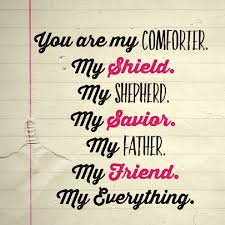
O my Savior, Shield, and Sun, Shepherd, Brother, Husband, Friend, Every precious Name in one, I will love Thee without end.  --John Newton

The Psalms is a rich and diverse source of scriptural wisdom.  In it you can find solace, strength, and sustenance.  It is at different times potent, piercing, and prophetic.  The poetry contained in this collection have varied themes.  We have already looked at the theme of the Law of God (see blog post from April 29).  We have also seen the theme of praise in the Psalms (see blog post from May 7).

Today I want to look at the theme of who God is.  We could spend years expounding the attributes of God in the Psalms.  God certainly wears a lot of hats, so to speak.  He manifests Himself differently to different people, yet remains consistent with His nature.  The Apostle Paul, in imitating Christ in order to spread the Gospel, said he had "become all things to all people in order that I might save some." (1 Corinthians 9:23).  Today I want to focus on three distinct yet similar personas.

Let's look at Psalm 3 together

O Lord, how many are my foes!  Many are rising against me; many are saying of my soul, "There is no salvation for him in God." Selah.  But You, O Lord, are a Shield about me, my Glory, and the Lifter of my head.  I cried aloud to the Lord, and He answered me from His holy hill.  Selah.  I lay down and slept; I woke again, for the Lord sustained me.  I will not be afraid of many thousands of people who have set themselves against me all around.  Arise, O Lord!  Save me, O God!  For You strike all my enemies on the cheek; You break the teeth of the wicked.  Salvation belongs to the Lord; Your blessing be on Your people.  Selah.

He is a Glorious Shield

Many of the Psalms have a military theme.  A warrior on the front lines of battle has prepared himself the best he can for his own protection.  He trusts his equipment; a modern soldier with a Kevlar vest feels less vulnerable than one without.  He trusts his comrades; a squadron willing to "take a bullet for you" is a lot more preferable than comrades in arms who would cut and run, leaving you exposed.  He also trusts his Commander; a wise leader will at least attempt to take every advantage--taking high ground, flanking the enemy at their weakest or most vulnerable position, bringing in timely air support and reinforcements.  These are all ways to think of a "shield" in military terms.

I have said before that I am not a Hebrew scholar.  However, a look at Strong's Concordance reveals that there are at least two Hebrew words translated "shield".  One is mâgên,  a word that literally means shield or buckler.  It also carries with it the idea of the scaly hide of a crocodile.  This word is found 60 times in the Old Testament, beginning with Genesis 15:1.  "After these things the word of the Lord came to Abram in a vision: 'Fear not, Abram, I AM your shield; your reward shall be very great'."

Abram had no reason to fear, because God had promised to be his covering, his defense.  God promised to defend Israel.  "Our soul waits for the Lord; He is our help and our shield.  For our heart is glad in Him, because we trust in His holy Name." (Psalm 33:20-21).  God cannot bless you unless He protects you.  If He has made a promise to His people, then He will protect His people.  The promise extends to those of us who place our trust in Him for our salvation.  "For the Lord God is a sun and shield; the Lord bestows favor and honor.  No good thing does He withhold from those who walk uprightly." (Psalm 84:11)

The other Hebrew word translated "shield" is tsinnâhand it is variously translated as shield or buckler, but several times it is translated "target," once as "hook" and once as "cold".  In 1 Kings 10 and again in 2 Chronicles 9 we read that Solomon made expensive shields or "targets" out of beaten gold.  I am not sure if these shields were round and looked like targets, but I do know that they were of great value.  Think about how God shields us from attacks we don't even know about.  He makes Himself the target so that we are protected.  He is our shield, of more value than gold.

Proverbs 25:13 says, "Like the cold of snow in the time of harvest is a faithful messenger to those who send him; he refreshes the soul of his master."  The word translated "cold" is the same word shield or covering.  The protection of God is refreshing.  In military terms, we speak of "cover fire"; that is, shots taken by your partners to pin down the enemy so that you can escape a dangerous place or move into a more strategic position.  This is what I thought of when I thought of the cold covering or shielding of snow over the fields; it is comprehensive, overpowering, and effective.  There is a similar thought in Scripture when the same word for shield is translated "hooks" in Amos 4:2.  "The Lord has sworn by His holiness that, behold, the days are coming upon you, when they shall take you away with hooks, even the last of you with fishhooks." It may be stretching the idea a bit, but when God sends "cover fire" to shield His people from their enemies, the enemies are pierced and taken away.

Psalm 91:4 says, "He will cover you with His feathers, and under His wings you will find refuge; His faithfulness is a shield and a buckler."  This may have been in Jesus' mind when He said in Matthew 23:27, "O Jerusalem, Jerusalem, the city that kills the prophets and stones those who are sent to it!  How often would I have gathered your children together as a hen gathers her brood under her wings, and you were not willing!"  His desire is to shield us, to shepherd us, to save us.

He is a Good Shepherd

We read Psalm 3 earlier.  I bring you attention back to verses 5 and 6: "I lay down and slept; I woke again, for the Lord sustained me.  I will not be afraid of many thousands of people who have set themselves against me all around."

We are all familiar with Psalm 23.

The Lord is my shepherd; I shall not want.  He makes me lie down in green pastures.  He leads me beside still waters.  He restores my soul.  He leads me in the path of righteousness for His name's sake.  Even though I walk through the valley of the shadow of death, I will fear no evil, for You are with me; Your rod and Your staff, they comfort me.  You prepare a table for me in the presence of my enemies; You anoint my head with oil; my cup overflows. Surely goodness and mercy shall follow me all the days of my life, and I shall dwell in the house of the Lord forever.

We see from this passage that He is our shepherd.  What does a good and faithful shepherd do?  He is present with the sheep; he provides for the sheep; and he protects and defends the sheep.  This idea is outlined further in John 10, when Jesus called Himself the Good Shepherd.

Jesus said to them, "Truly, truly I say to you, I am the door of the sheep.  All who came before me are thieves and robbers, but the sheep did not listen to them.  I am the door.  If anyone enters by Me, he will be saved and will go in and out and find pasture.  The thief comes only to steal and kill and destroy.  I came that they may have life and have it abundantly.  I am the good shepherd.  The good shepherd lays down his life for the sheep."  --John 10:7-11.

This brings us to our final point.

He is a Great Savior

Back to our passage in Psalm 3.  Let's read verses 2 and 8.  "Many are saying of my soul, 'There is no salvation for him in God.'  Salvation belongs to the Lord; Your blessing be on Your people!"  For what purpose is He shielding us?  For our own health and well being?  I don't think so.  It is for His glory.  Psalm 40:16 says, "Let all those who seek You rejoice and be glad in You; let such as love your salvation say continually, 'The Lord be magnified'!"  Psalm 18:46 says, "The Lord lives! Blessed by my Rock!  Let the God of my salvation be exalted." 

For what purpose or to what end does He shepherd us?  So that we can be slaughtered and roasted and served up at His table?  Not at all!  He guides us so that we can ultimately glorify Him and give Him praise forever.  Titus 3:5-7 says "He saved us, not because of works done by us in righteousness, but according to His own mercy, by the washing of regeneration and renewal of the Holy Spirit, whom He poured out on us richly through Jesus Christ our Savior, so that being justified by His grace we might become heirs according to the hope of eternal life."

We need mercy, because we are eternally separated from His holy nature due to our sinful nature.  We need grace, because we cannot be made holy without His direct intervention.  2 Corinthians 9:15 says, "Thanks be to God for His inexpressible gift!"  What gift is that?  Ephesians 2:8 says, "For by grace you have been saved through faith.  And this is not your own doing; it is the gift of God."  Psalm 22 foretells of this gift: God sent His one and only Son (John 3:16), and used Him as a sacrifice for us.  The sin of all mankind, past and future, was laid on Him and He was put to death for us.  "My God, My God, why have you forsaken me," Jesus cried, referencing Psalm 22:1.  He bore our sin, and a Holy God could not look upon sin, so that He turned away from His only Son and condemned Him to death.  Psalm 22:7 says, "All who seek me mock me; they make mouths at me; they wag their heads; 'He trusts in the Lord; let God deliver him'." This is just what the Pharisees said when Jesus uttered those devastating words, "My God why have You forsaken me?"  Psalm 22:17-18 says, "I can count all my bones--they stare and gloat over me; they divide my garments among them, and for my clothing they cast lots."  This is exactly what happened at the crucifixion, and God foretold it through David the Psalmist.

Our salvation was purchased through the death, burial, and resurrection of Jesus Christ, God's anointed. Psalm 2:2 says, "The kings of the earth set themselves, and the rulers take counsel together, against the Lord and against His Anointed."  Friend, do not follow the rulers of this world, who have their reward in this life.  Let Him shield you from the wrath to come.  Let Him shepherd you in His Way so that you can praise Him in this life and enjoy Him in the next.  Let the blood of Christ cover you, so that when you stand before God in His final judgment, He will not see your sin, but rather the blood of Jesus who by His great sacrifice offers a great salvation.